
Lorain Electronics Corporation (LEC)
The Lorain equipment images (1940s-50s) shown below are in a roughly chronological order. The first 15 images on this page are courtesy of Robert Carver
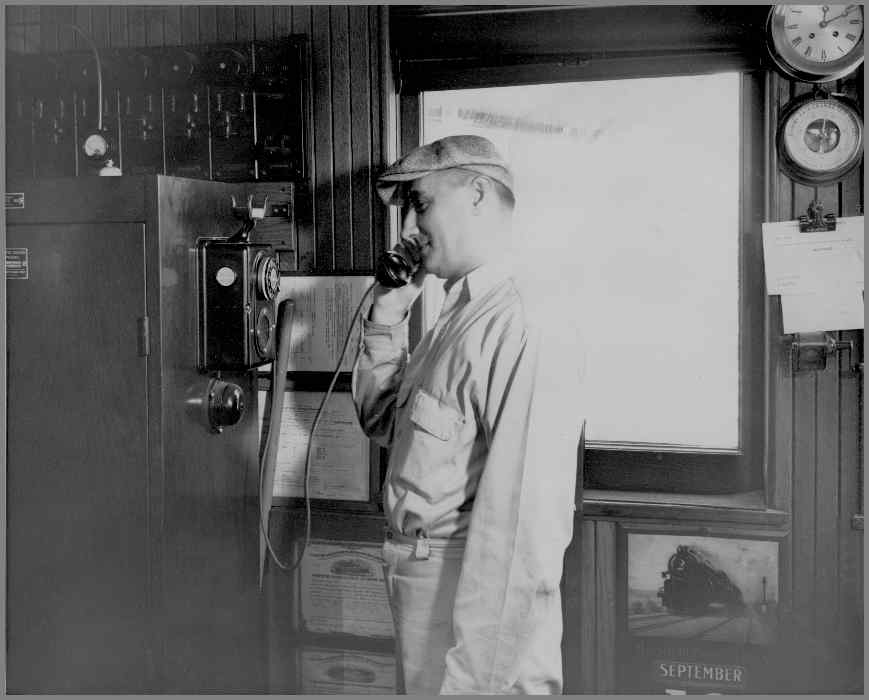 A
LC-50D 1944 boat installation on the
SS George F. |
 A LC-50D 1944 boat installation |
|---|---|
We know a lot about the two pictures above - information gleaned from enlargements of the paperwork on the wall. The photos were taken on September 16 or 18, 1944. The boat belonged to the Pittsburgh Steamship Company (US Steel), and one of the officers was Homer R. Johnson (pictured) - Master's License # 165746. What we didn't know initially was the name of the boat. However detective work by Dennis Widdows identified it as the SS George F. Baker.
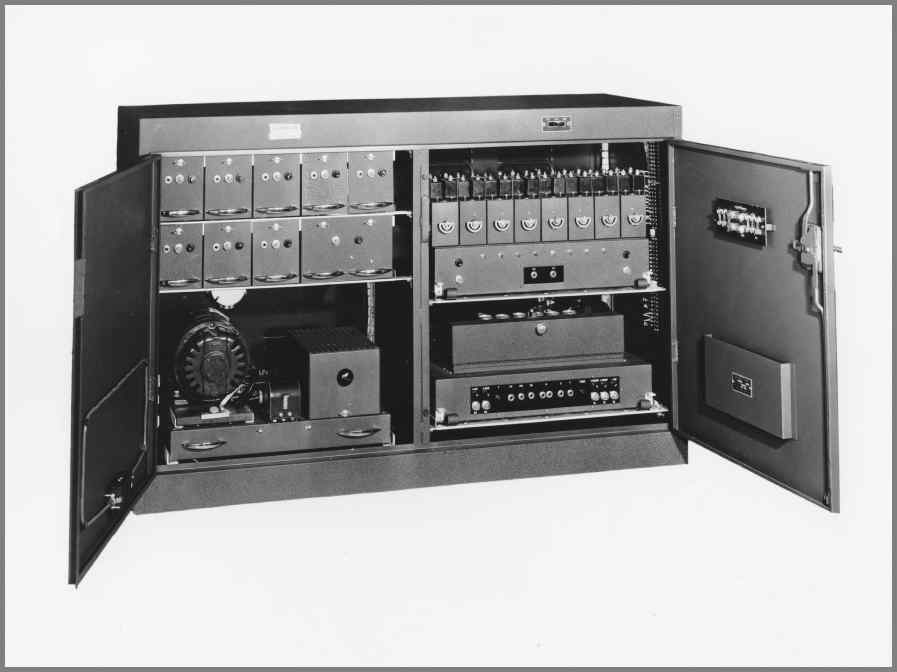
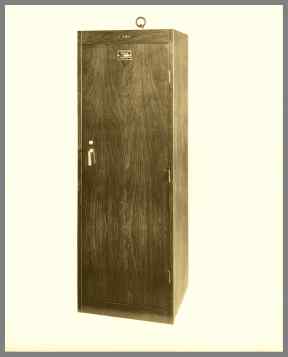 This beautiful 6 foot high cabinet from the |
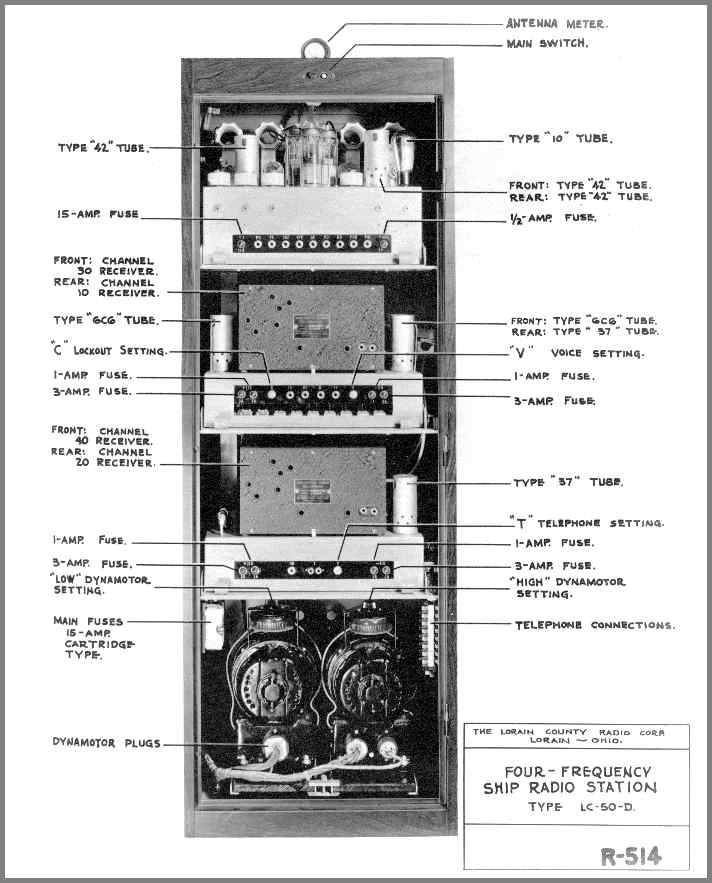 Type LC-50 D Inside - Click for large image |
|---|---|
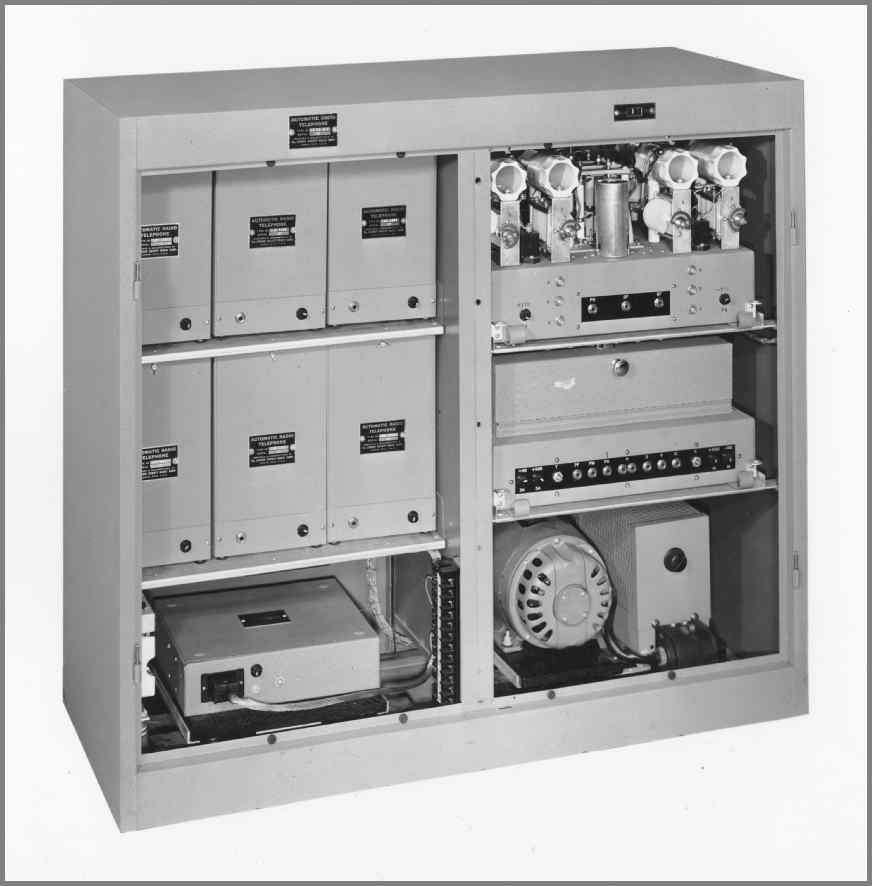 Type
LC 50 96 - 6 Channel AM MF/HF rig |
 Type
LC 100D - 8 Channel MF/HF rig (DC Supply |
|---|---|
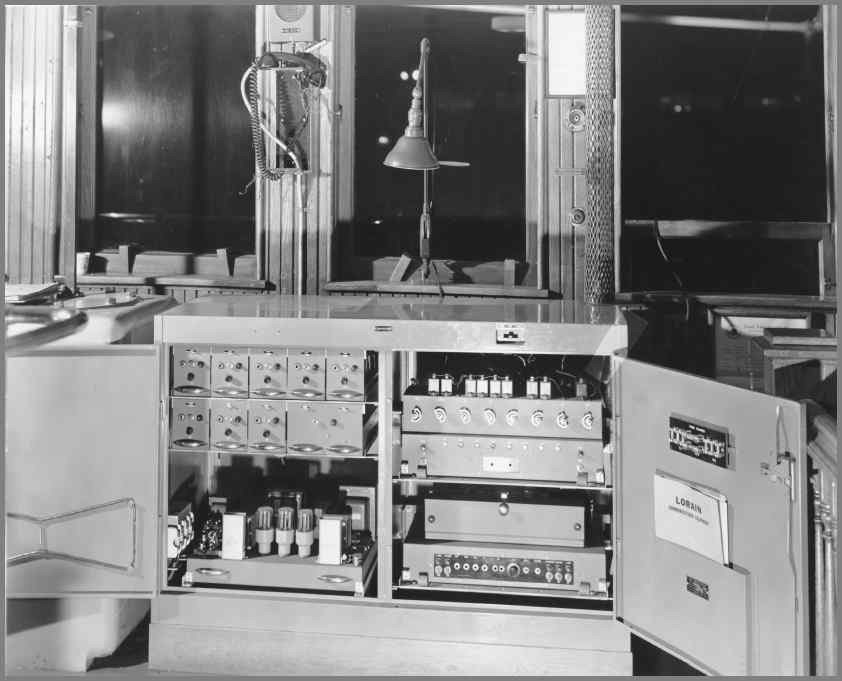 Type LC 100-8 (AC Supply) in process of being |
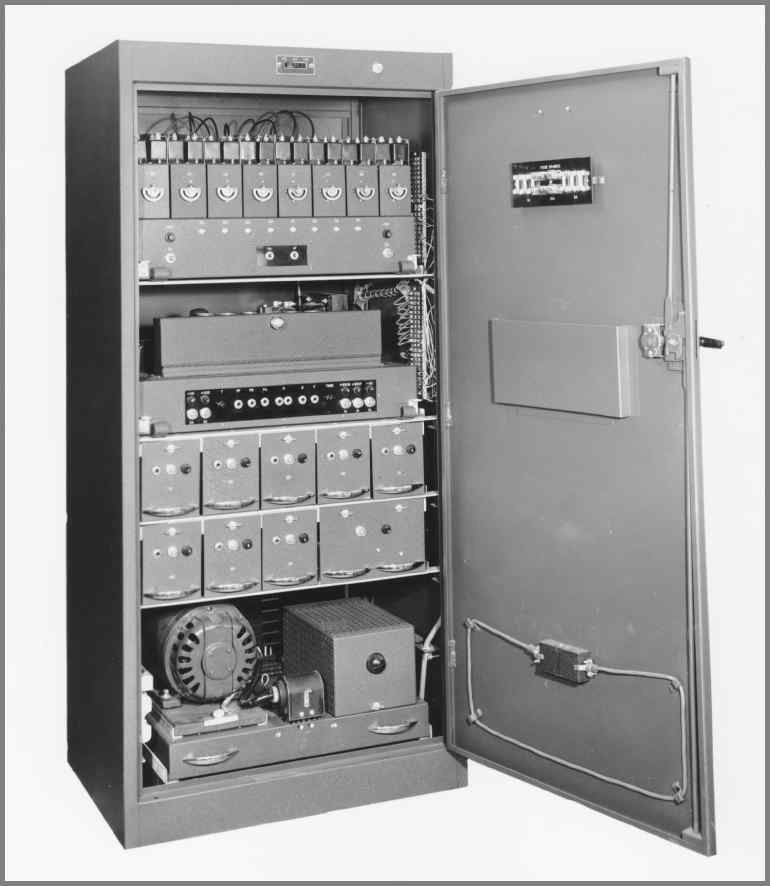 Eight
channel AM MF/HF in high |
|---|---|
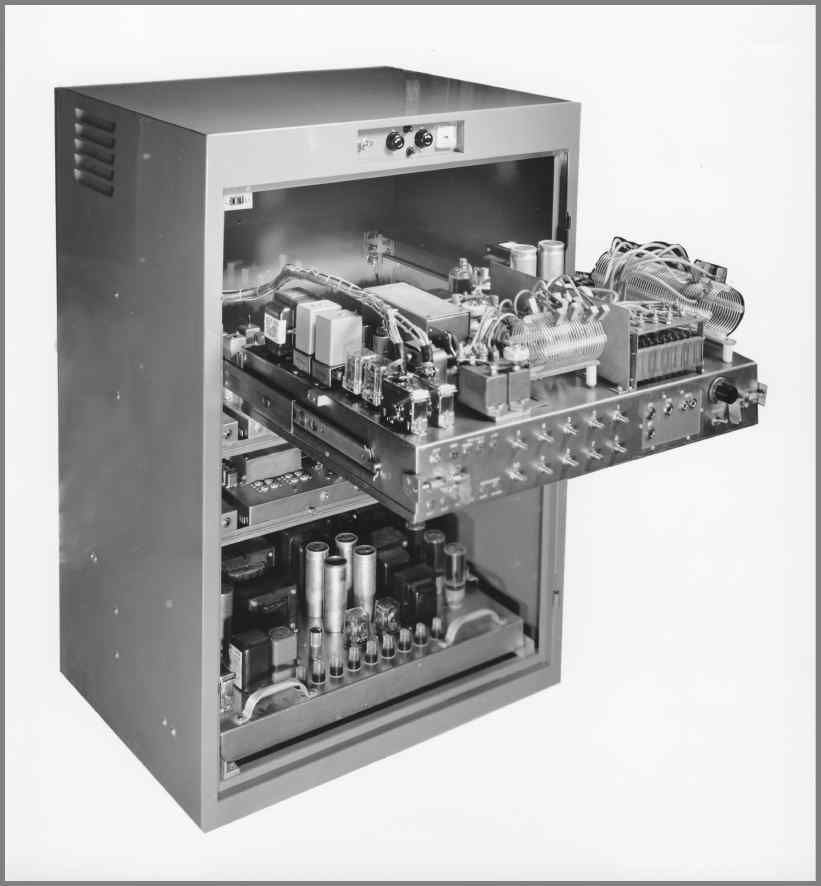 Ten
Channel AM MF/HF unit of mid- |
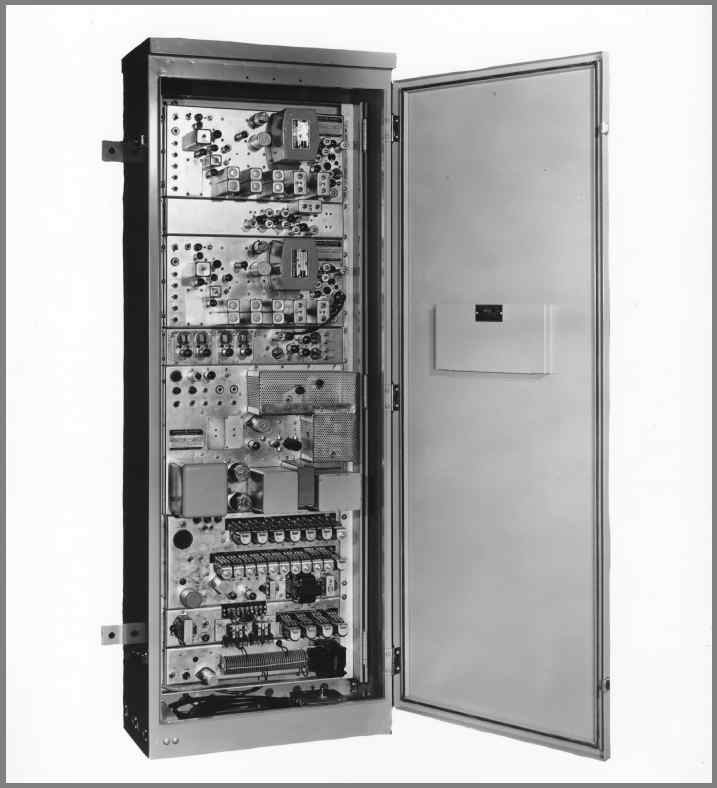 Shipboard
VHF-FM radio Type MC-261 - 7 Channel - Dual
Rx - |
|---|---|
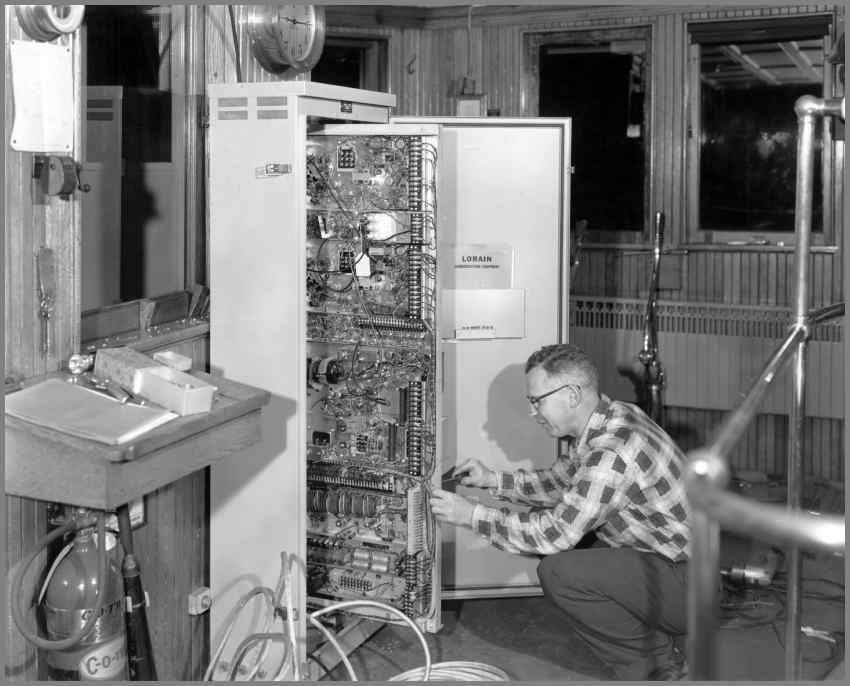 Type MC-261 VHF-FM unit being installed on the Wm. G. |
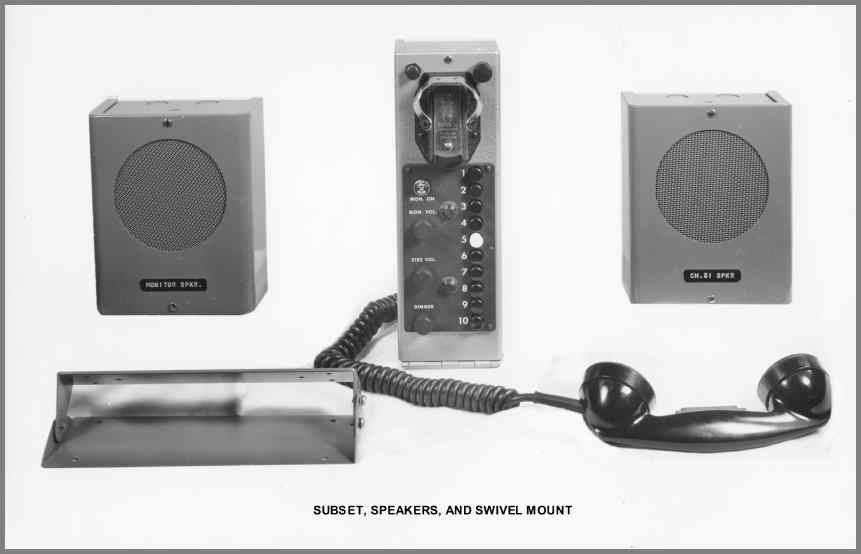 Control head and accessories - 1950s vintage. |
|---|---|
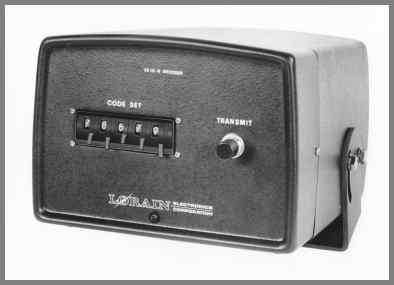 LEC Encoder for Amoco ocean going oil tanker |
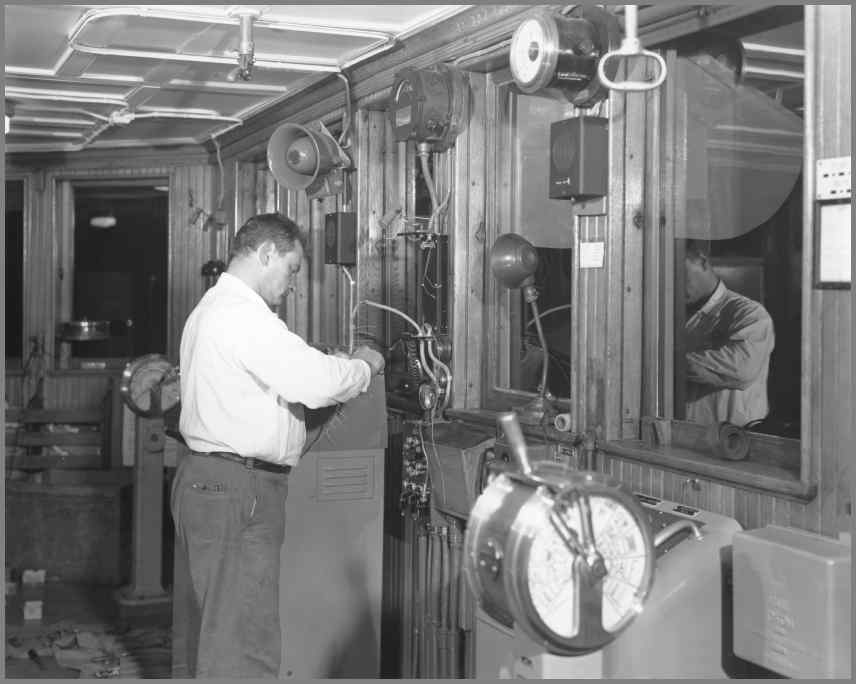 Installing
the equipment control head aboard the Wm. G. |
|---|---|
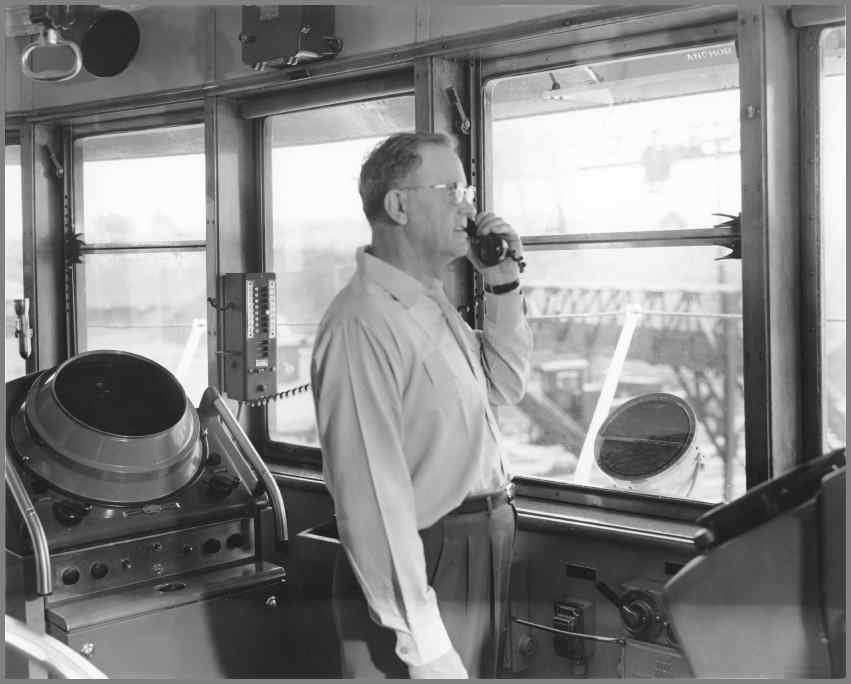 Captain (?) - Steamer John T. Hutchinson (WA 6537)
using |
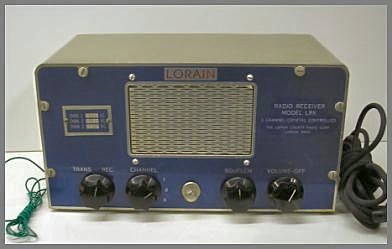 This Model LRK 3 channel 120VAC monitor receiver is probably |
|---|---|
The control head in the picture on the left immediately above is for a 16 channe, dual MF/HF and VHF-FM radio-telephone installation. See this page for larger images of this one and and a similar 8 channel VHF-FM one. Also on this page Charles C. Reynolds provides more information about these control heads.
 Lorain VHF-FM Control Head |
 A 14 channel control head for VHF-FM. |
|---|---|
 Konigsberg (Konel) SSB Transceiver KR-72CA rebranded as Lorain KR-102C |
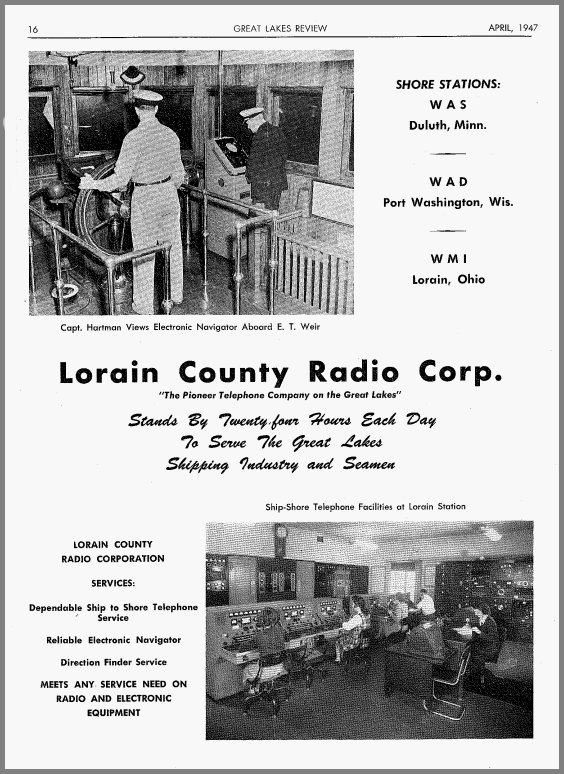
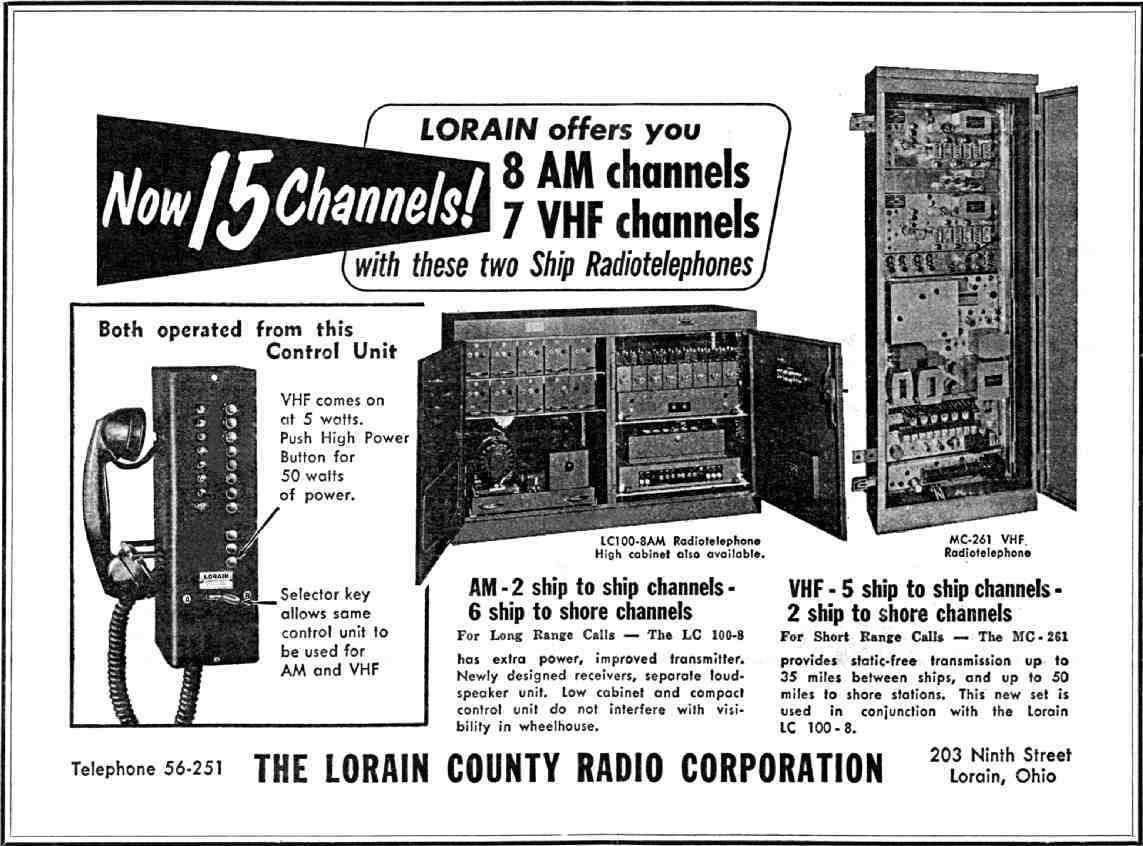
We have three Lorain advertisements. The first advertises Lorain's services and is courtesy of Joe Papworth, K8MP. It is from the April 1947 issue of the Great Lakes Review. The second advertisement is from a September 1954 Lorain County Radio Corp. publication entitled "Study Guide for Third Class Radio-Telephone Operator Permit." The MC-261 unit in the tall cabinet on the right in the advertisement was built by General Electric in Syracuse, NY. In 1959, when the Archivist first went to work as a design engineer for General Electric, equipment of this vintage had already been replaced by newer designs, but GE later supplied Lorain Electronics with several versions of newer VHF-FM receiver and transmitter chassis for shipboard installations and also, I believe, for the LEC 14 station automated VHF-FM network . The third ad is a Canadian GE ad for Lorain VHF-FM gear with GE RF modules. Here is a PDF of some photos of the LEC LC 100 M8 found in a Chicago surplus warehouse in 2007. In 1944 LEC issued this booklet of Operating Instructions for the HF Automatic Radiotelephone System of that time. |
|---|---|

Later (1982) LEC issued this 30+ page Great Lakes Marine Telephone Directory which included operating instructions for the VHF Automatic Radiotelephone System which they had developed and were justifiably proud of.
We have three Lorain advertisements. The first advertises Lorain's services and is courtesy of Joe Papworth, K8MP. It is from the April 1947 issue of the Great Lakes Review. The second advertisement is from a September 1954 Lorain County Radio Corp. publication entitled "Study Guide for Third Class Radio-Telephone Operator Permit." The MC-261 unit in the tall cabinet on the right in the advertisement was built by General Electric in Syracuse, NY. In 1959, when the Archivist first went to work as a design engineer for General Electric, equipment of this vintage had already been replaced by newer designs, but GE later supplied Lorain Electronics with several versions of newer VHF-FM receiver and transmitter chassis for shipboard installations and also, I believe, for the LEC 14 station automated VHF-FM network . The third ad is a Canadian GE ad for Lorain VHF-FM gear with GE RF modules.
This short item is from a history of GE's mobile radio business: May, 1955 - Cruise of the yacht, Cappy, on the Great Lakes to survey coverage furnished by Lorain County Radio Corporation's, 250 Watt GE station, at Lorain, Ohio.
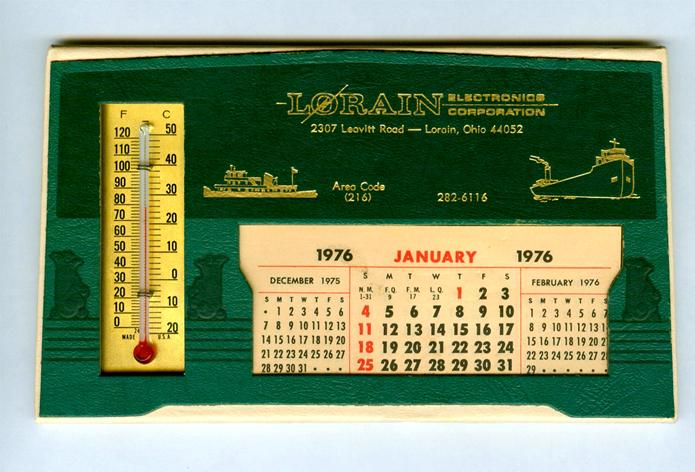
Here's a very nice 8 Page Lorain Electronics advertising brochure from about 1954, and a 1976 LEC calendar.
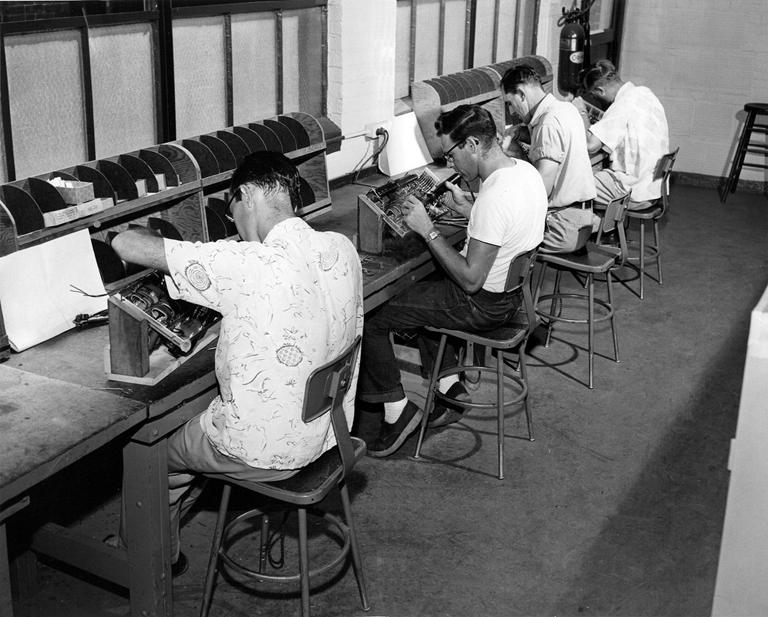
Here's a photo of 4
workers assembling electronic chassis in the LEC factory.
Names and date unknown.
In 1974 Lorain Electronics issued this VHF-FM frequency change bulletin to ship masters.
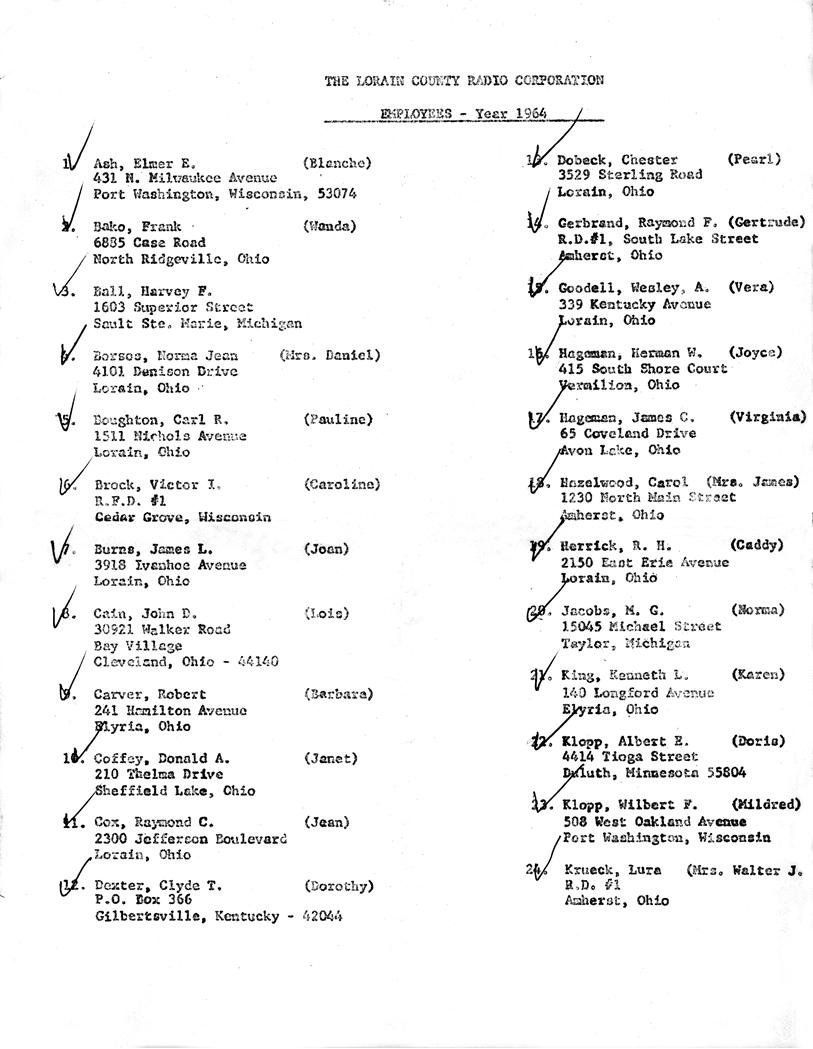
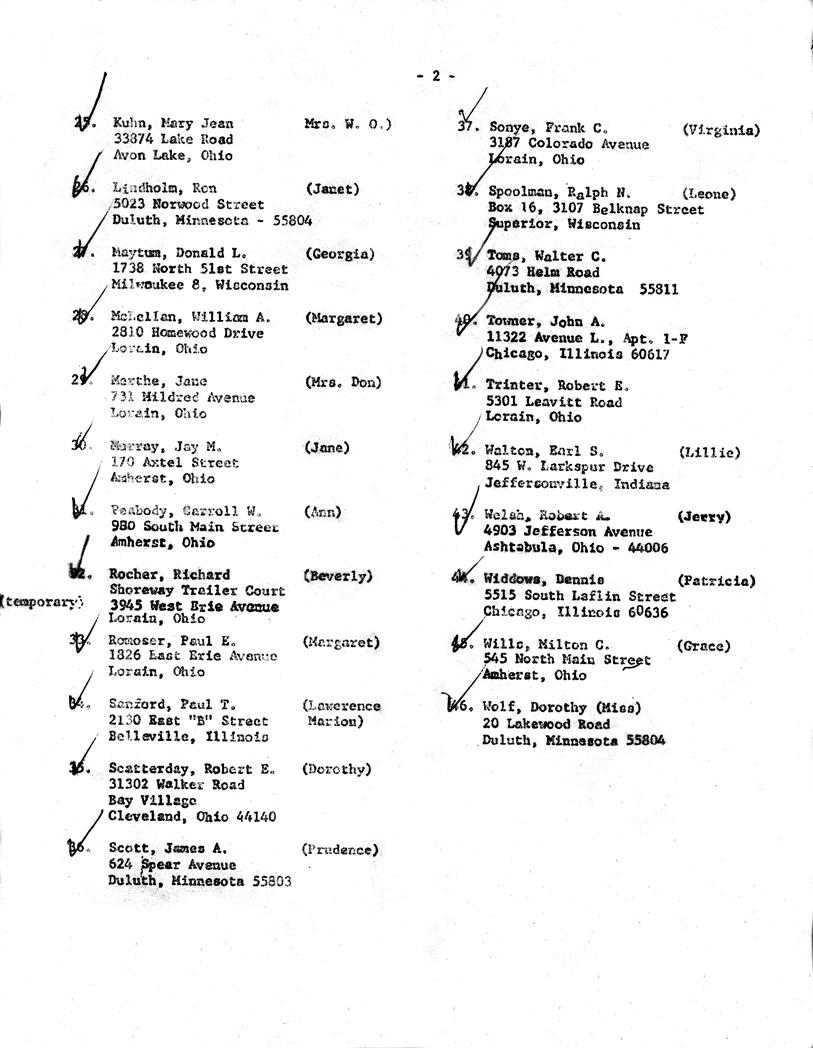
John Dean provided a 1964 list of LEC
employees A-K and L-W
saved by this father-in-law Frank Bako, a former LEC employee. Richard
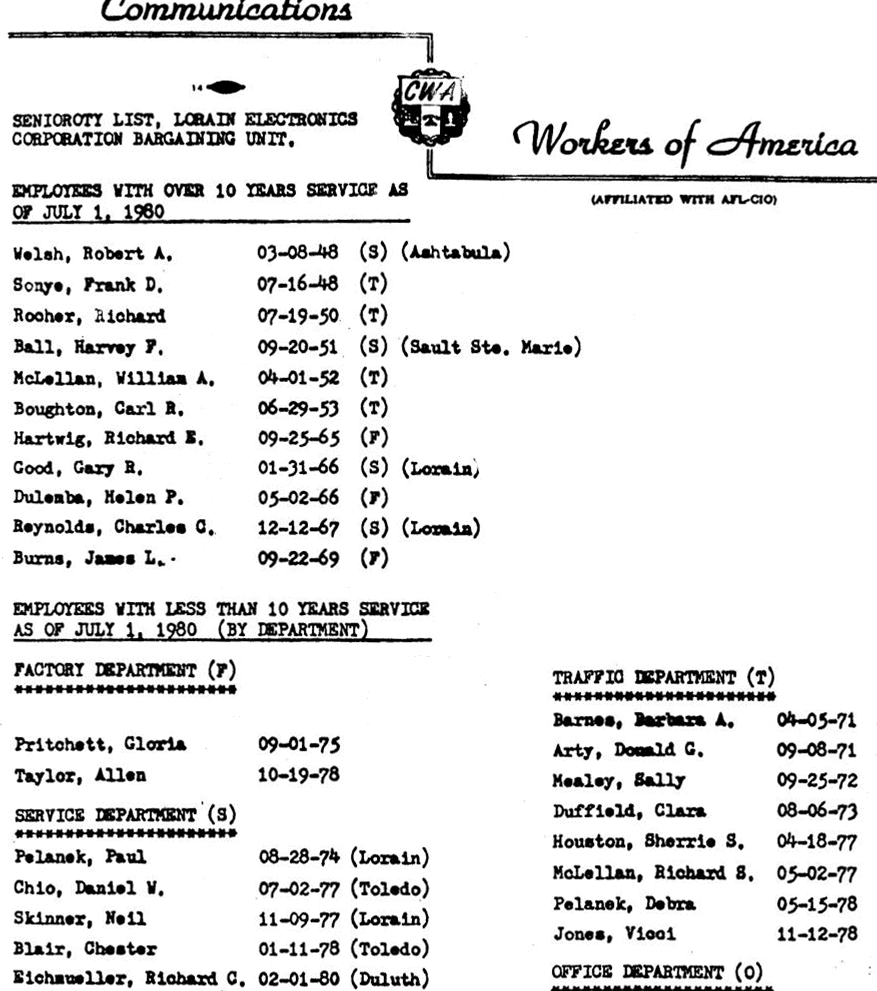
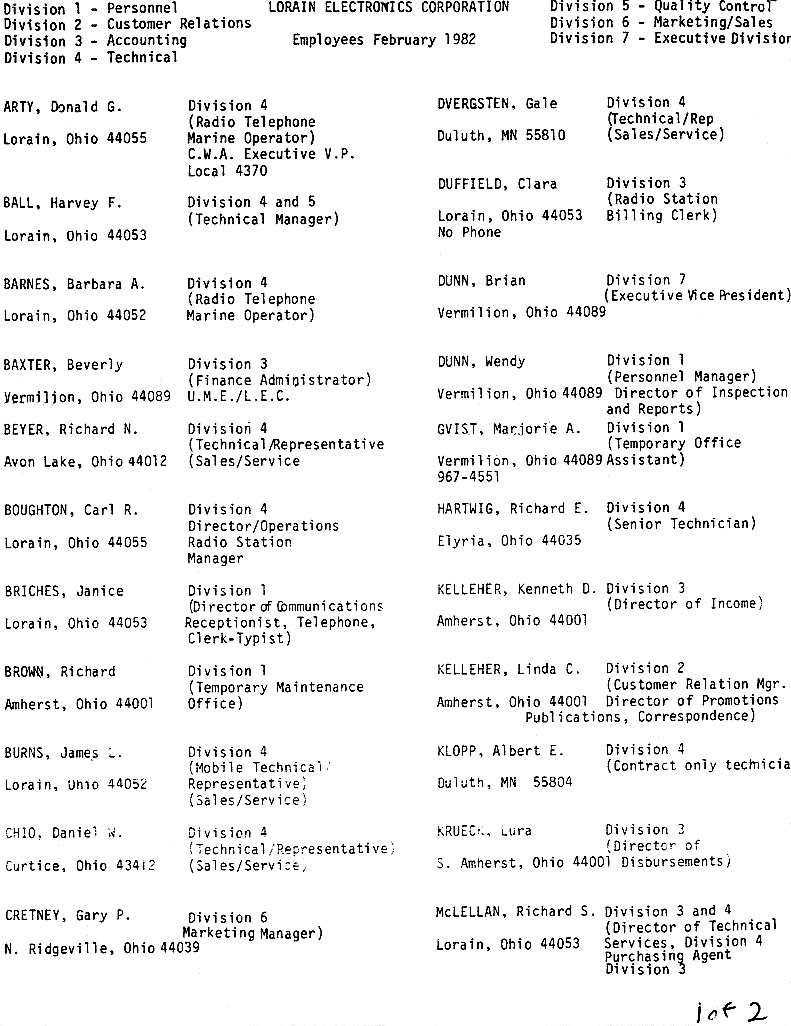
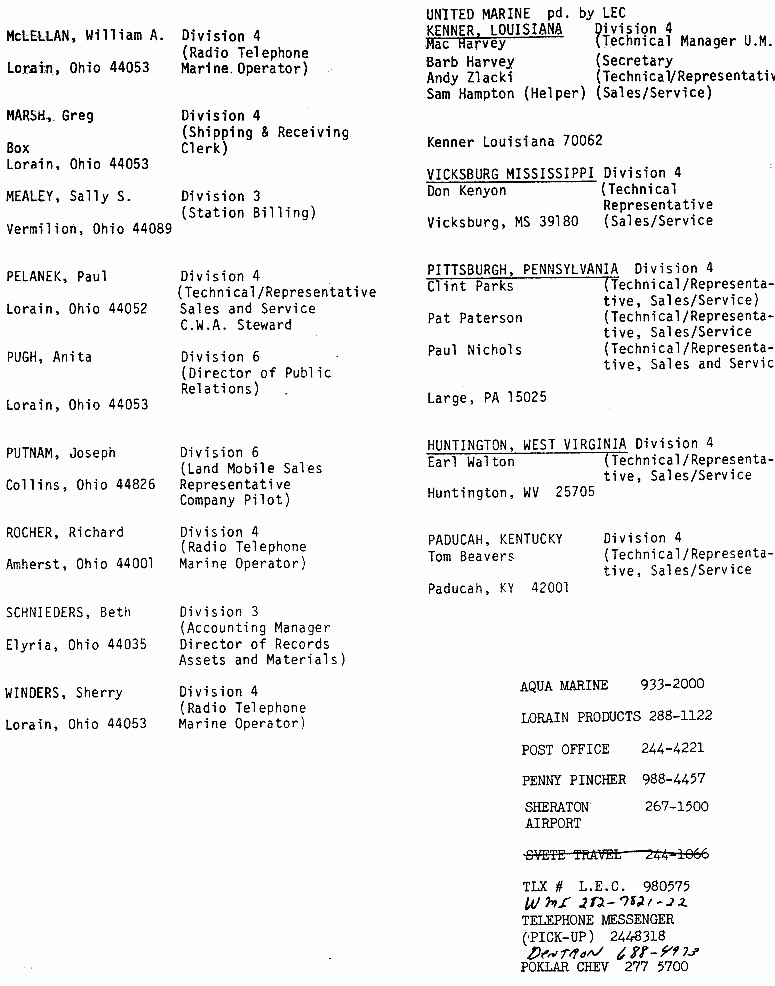
Hartwig, K8ML has provided
listings of LEC employees in 1980
and 1982-1 and 1982-2.
Personal addresses and telephone numbers have been removed from the
last 3 lists.
All of the Lorain Electronics Sales & Service Dept. personnel quite at the end of 1980 shortly after the purchase of LEC by Oakmont Electronics. Most of the technicians then to work for ITT-Mackay Marine and became the Great Lakes Depot of same. In 1985 the remaining contents of 2307 Leavitt Rd. were sold and Lorain Electronics closed it's doors.